

Is your home’s electrical system still stuck in the past while you’re trying to power a 2026 lifestyle, or are you noticing the specific signs I need a new electrical panel? You’ve likely felt that spike of worry when a breaker trips just because you turned on the vacuum or started the dishwasher. It’s stressful to wonder if flickering lights are a simple nuisance or a serious fire hazard waiting to happen. You want your home to be a place of stability, not a source of technical frustration.
This guide will help you identify the critical warning signs of an outdated system so you can protect your property and gain total peace of mind. By recognizing these red flags early, you can avoid unexpected power failures and ensure your system is ready for modern demands like EV charger installation. Understanding the health of your panel is the first step toward a safer, more reliable home.
We’ll walk through a clear safety checklist based on the 2026 National Electrical Code updates, which include important new rules for GFCI protection and service disconnects. You’ll also learn why moving to a 200-amp panel is the standard for future-proofing your home against the energy needs of smart appliances and modern technology.
Key Takeaways
- Learn how your electrical panel acts as the primary safety barrier protecting your home from dangerous overloads and short circuits.
- Identify common performance red flags, such as frequent breaker trips and flickering lights, which are clear signs I need a new electrical panel.
- Discover how to spot physical decay, including rust or burning smells, that could indicate an immediate fire hazard in your system.
- Understand why modern lifestyle additions, like EV charger installation or high-power appliances, often require a capacity upgrade to 200 amps.
- Find out why a professional safety diagnostic is essential for identifying hidden electrical issues that a DIY inspection might miss.
Understanding Your Electrical Panel: The Heart of Your Home’s Safety
Your electrical panel is the central hub for every light, appliance, and device in your home. Often referred to as a distribution board, this metal box acts as the primary safety gateway between the utility grid and your living space. It manages the flow of electricity, ensuring that power is distributed evenly and safely to your various circuits. Understanding how this system works is the first step in recognizing the specific signs I need a new electrical panel before a minor issue turns into a major hazard.
In older homes, you might still find fuse boxes that require manual replacement when a circuit blows. Modern systems use circuit breakers that can be toggled back on, but the core mission remains the same: preventing electrical fires. In 2026, our homes are doing more work than ever. We’ve moved from simple lighting and basic appliances to high-demand environments filled with smart technology and electric vehicle chargers. This shift means your panel isn’t just a box on the wall; it’s a critical safety component that must be capable of handling modern loads.
How Circuit Breakers Protect Your Property
A circuit breaker is designed to “trip” or shut off power when it detects an overload or a short circuit. This is a vital safety feature. It stops the flow of electricity before the wires in your walls can overheat and start a fire. However, there’s a big difference between a one-time trip caused by a faulty toaster and a critical panel failure. If you find yourself resetting a breaker every few days, you aren’t just dealing with a nuisance. You’re ignoring one of the clearest signs I need a new electrical panel. Repeatedly resetting a breaker without fixing the underlying cause is dangerous because it puts constant stress on aging components.
The Evolution of Home Power Demands
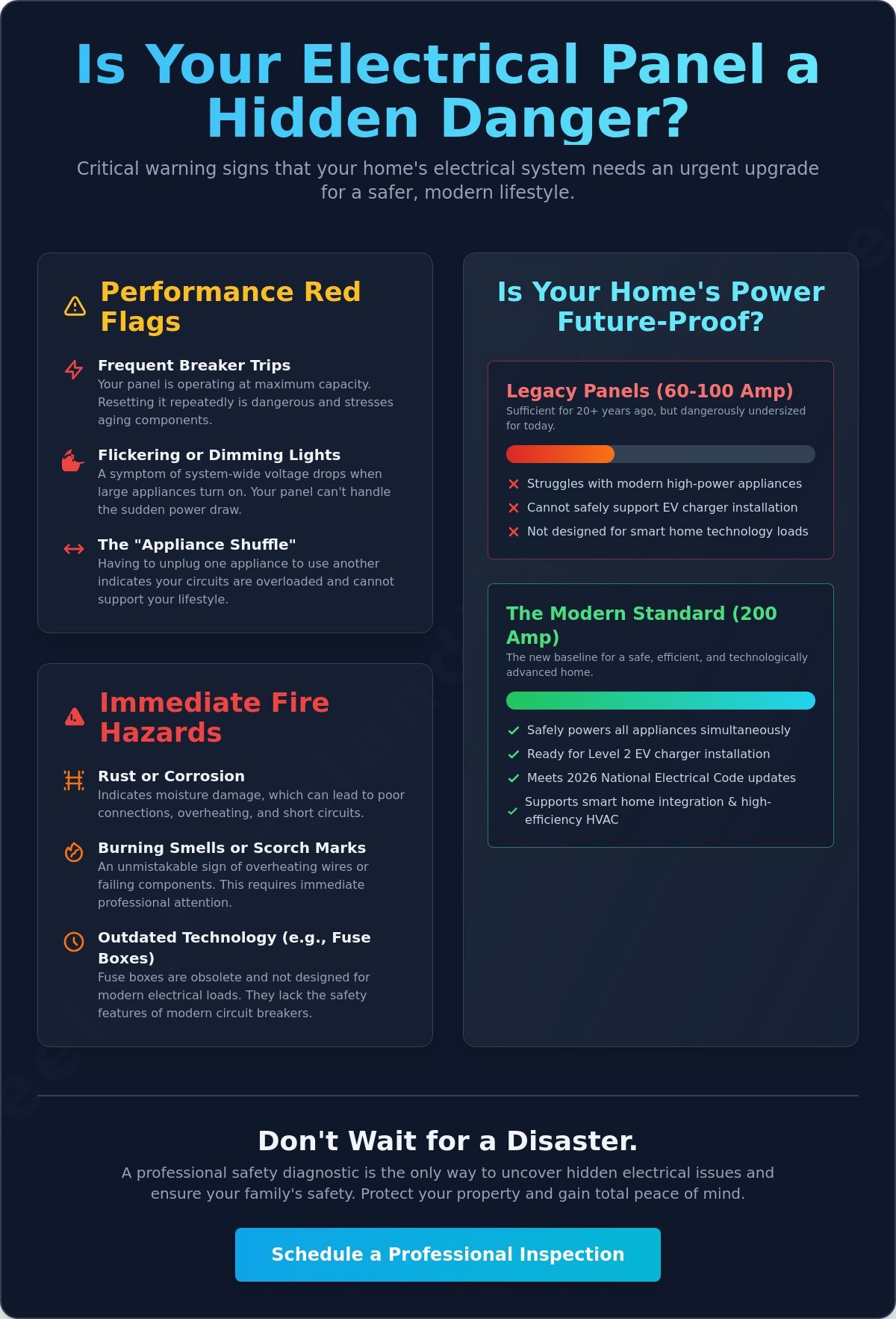
Twenty years ago, a 100-amp panel was often sufficient for the average household. Today, homeowners in Richmond and Katy are finding that legacy 60-amp or 100-amp systems simply can’t keep up. A 200-amp panel has become the modern standard for several reasons:
- EV Charger Installation: Level 2 chargers require a significant, dedicated power draw that older panels weren’t built to support.
- Smart Home Integration: From automated security systems to smart lighting, the constant load has increased.
- High-Efficiency HVAC: While newer units are efficient, their initial startup power requirements can strain an undersized system.
If your panel was installed when the home was built decades ago, it likely wasn’t designed for the 2026 reality of home electrification. Upgrading ensures your home remains safe and functional as technology continues to advance. To understand the full scope of what this upgrade provides, review the benefits of a 200 amp panel upgrade for Texas homes before making your decision.
Performance Red Flags: When Your Panel Struggles to Keep Up
If your home was built more than 20 years ago, you might notice your electrical system behaving in ways that feel like a nuisance but are actually warnings. One of the most common signs I need a new electrical panel is the frequent tripping of circuit breakers during normal daily activities. You shouldn’t have to choose between running the microwave and the toaster at the same time. If your breakers trip under standard loads, your panel is likely operating at its maximum capacity and cannot safely distribute more power.
Another red flag is the “appliance shuffle.” This happens when you have to unplug the space heater to use the hair dryer, or the vacuum cleaner causes a shutdown in the living room. These are not just quirks of an old house. They are indicators that your current distribution system cannot handle the amperage your modern lifestyle demands. You might also notice breakers that feel “spongy” or won’t click firmly into the “on” position. A healthy breaker should have a crisp, mechanical snap. If it feels loose or refuses to stay reset, the internal components have likely worn out or suffered heat damage.
Why Are My Lights Flickering?
Do your lights dim for a split second when the air conditioner or refrigerator kicks on? This is often a localized symptom of a larger issue. When high-draw motors start up, they pull a large amount of current instantly. If your panel is undersized, this causes a temporary “voltage drop” across the system. A voltage drop is a specific symptom of an undersized bus bar that cannot distribute enough current to satisfy the sudden demand. While a single flickering bulb might just be a loose connection, house-wide dimming suggests your panel is struggling to keep up with the load. These issues often overlap with other signs of a serious wiring problem that require professional attention to keep your property safe.
The Danger of Frequently Tripping Breakers
A breaker that trips is doing its job, but a breaker that trips constantly is a hazard. Every time a circuit overloads, it generates heat. Over time, this heat degrades the breaker’s internal spring mechanism. If the spring weakens, the breaker may eventually fail to trip during a genuine power surge or short circuit. This failure can lead to electrical fires inside your walls because the system no longer has a functioning “off” switch. If you are experiencing these performance issues, it is time to consider a professional electrical panel upgrade in Richmond, TX. Ensuring your home has a modern, high-capacity panel provides the stability your family needs. If you’re unsure about your current capacity, scheduling an electrical panel upgrade can prevent these minor frustrations from becoming major safety risks.
Physical Signs of Decay and Outdated Technology
While flickering lights are internal symptoms, physical changes to the box itself are often more urgent signs I need a new electrical panel. You should periodically open the door of your panel and look for visible rust or corrosion on the metal enclosure. If you notice a faint burning smell, similar to ozone or melting plastic, it is a signal that wires are overheating or arcing behind the scenes. These odors often indicate that the insulation on your wiring is beginning to fail due to excessive heat.
Listen closely when your home is under a high load, such as when the AC is running on a hot afternoon. If you hear buzzing, hissing, or popping sounds, electricity is likely jumping between loose connections. This is a severe fire risk that requires immediate professional attention. Additionally, if your home still utilizes a legacy fuse box with screw-in glass fuses, it is decades past its expected lifespan. Modern 2026 safety standards require circuit breaker systems that can be easily reset and provide more reliable protection against modern power demands.
Corrosion and the Texas Climate
In areas like Sugar Land and Katy, the high humidity levels significantly accelerate panel oxidation. Moisture can seep into the enclosure through conduit lines, leading to a “chalky” white or green residue on the breakers. This corrosion isn’t just an aesthetic problem. It interferes with electrical conductivity and can prevent the system from grounding properly. When metal components rust, they create electrical resistance. This resistance generates even more heat, which further damages the panel components and increases the risk of a structural fire. Before physical decay worsens, understanding the electrical panel inspection cost in 2026 can help you budget for a professional evaluation before minor corrosion becomes a major hazard.
Dangerous Legacy Brands: FPE and Zinsco
Certain brands of panels are notorious for failing to trip, even when a massive overload occurs. Federal Pacific Electric (FPE) “Stab-Lok” panels and Zinsco panels are the primary offenders. You can identify these by looking for the brand name on the panel door or observing the specific red or multi-colored toggles used by Zinsco. These panels are so unreliable that many insurance companies now refuse to provide coverage for homes where they are installed. If you find one of these names inside your grey metal box, it is a definitive sign that a replacement is necessary to protect your property and ensure you remain eligible for home insurance.
Capacity Limits: When Your Lifestyle Outgrows Your Panel
Sometimes the most obvious signs I need a new electrical panel aren’t about physical damage, but about physical space. If you open your panel door and see every single slot occupied by a breaker, you’ve reached a hard limit. Homeowners often try to compensate for a lack of outlets by daisy-chaining power strips or running extension cords across rooms. This creates a fire hazard and indicates your home’s original wiring design can no longer support your current electronic footprint. Adding a single high-draw appliance can be the tipping point for a system already at its maximum capacity.
Consider the cumulative load of these common 2026 home additions:
- Dedicated circuits for a new hot tub or sauna.
- High-powered double ovens or induction cooktops.
- Secondary air conditioning units for home additions or garages.
- High-end home theater systems and multi-room audio.
Preparing for Electric Vehicle Charging
Modern transportation is changing how we use home energy. A Level 2 EV charger typically requires a dedicated 40 to 60 amp circuit to provide efficient charging speeds. Most older 100-amp panels simply don’t have the headroom to accommodate this additional load alongside your existing HVAC system and appliances. Before you invest in a new vehicle, you should determine if you need an electrical panel upgrade for an EV charger. Moving to a 200 amp panel upgrade in Texas is the best way to future-proof your garage and ensure your home can handle the charging demands of 2026 and beyond.
Renovations and Home Office Demands
Kitchen remodels often introduce professional-grade appliances that pull significantly more power than their predecessors. Similarly, the rise of the permanent home office has increased the constant load on residential circuits. High-end PCs, home servers, and smart home hubs run 24/7, creating a baseline demand that older panels weren’t built to sustain. You might see “tandem breakers” used to squeeze more circuits into a full panel. While these allow for more connections, they don’t increase the total power coming into your home. They are a temporary fix that can lead to overheating if the bus bar is overloaded.
If you find yourself relying on extension cords or hesitating to buy new technology because of your home’s age, it’s time to act. You can ensure your property is ready for the next decade by scheduling a professional electrical panel upgrade today. This proactive step removes the limitations of an outdated system and provides the reliable power your modern lifestyle requires.
Taking Action: Professional Inspection and Next Steps
Identifying the common signs I need a new electrical panel is the first step toward a safer home, but the transition from observation to action requires professional expertise. You might be tempted to open the panel and tighten a few screws yourself. However, the high voltage inside a distribution board presents a lethal risk to anyone without specialized training. A licensed electrician doesn’t just look for obvious damage; they use diagnostic tools to find hidden failures that a DIY inspection will inevitably miss.
Upgrading your system provides benefits that go beyond simple safety. A modern 200-amp panel is a significant asset if you plan to sell your property. Most buyers in 2026 prioritize homes that are already equipped for modern demands like high-speed smart home hubs and EV charging. Additionally, many insurance providers now offer lower premiums or are more willing to provide coverage when they see a certified, code-compliant panel upgrade. It’s an investment that pays for itself through increased property value and long-term security.
Before you commit to a project, it’s helpful to understand the average cost to upgrade your electrical panel in 2026. This transparency helps you budget effectively while ensuring you aren’t ignoring the clear signs I need a new electrical panel due to financial uncertainty. You may also want to review the electrical panel inspection cost for 2026 to understand what a professional safety diagnostic involves before committing to a full replacement.
The Professional Inspection Checklist
During a comprehensive safety diagnostic, our team goes far beyond a visual check. We use thermal imaging cameras to detect “hot spots” where components are overheating behind the breakers. These heat signatures are invisible to the naked eye but are early indicators of imminent failure. We also check the torque on every lug to ensure connections haven’t loosened over time due to thermal expansion. Finally, we verify that your grounding and bonding systems meet the specific local codes for Richmond, TX, ensuring your home is protected from external power surges.
Scheduling Your Upgrade with Confidence
The process of replacing a panel is often faster than homeowners expect. Your Home Electrical and Handyman Services LLC manages the entire permit process with local authorities, so you don’t have to worry about the paperwork. Most standard panel replacements are completed within a single day, minimizing the time your home is without power. We coordinate with the utility company to ensure a seamless disconnect and reconnect, leaving you with a system that is fully tested and ready for use. Ensure your home is safe; contact us for a panel inspection today to get a clear picture of your system’s health.
Secure Your Home’s Future with a Modern Electrical System
Your electrical panel is the foundation of your property’s safety and modern functionality. Recognizing the specific signs I need a new electrical panel is essential for preventing fire hazards and supporting today’s high-draw technology. Whether you’re dealing with flickering lights, physical corrosion, or a system that’s simply outgrown its capacity, taking a proactive approach is the best way to protect your investment. A modern 200-amp service doesn’t just solve current frustrations; it prepares your home for the electrification demands of the next decade.
Don’t wait for a total power failure to address your home’s needs. Our team of licensed and insured Texas electricians has been locally owned in Richmond since 2021. We bring specialized expertise in EV charger and panel upgrades to every project, ensuring your work meets the latest safety standards. We’re here to help you navigate these technical decisions with clarity and professional assurance. It’s our goal to make sure your property is in safe, capable hands.
Get a Professional Electrical Panel Assessment in Richmond Today. You deserve the peace of mind that comes from a reliable, future-proof electrical system that keeps your family safe.
Frequently Asked Questions
How much does it cost to replace an electrical panel in 2026?
The total investment for a panel replacement depends on the amperage you choose and the current condition of your home’s wiring. Costs are influenced by labor hours, the specific materials required for your enclosure, and local permit fees. It is best to have a professional evaluate your specific setup to provide an accurate estimate for your property’s needs.
Is a 100-amp panel enough for a modern home?
A 100-amp panel is rarely sufficient for a modern household in 2026. With the rise of electric vehicle charging and high-performance smart appliances, most homes now require 200-amp service to operate safely. If you plan on adding a hot tub or a dedicated home office, a 100-amp system will likely struggle to handle the cumulative load.
Can I just replace a single breaker instead of the whole panel?
You can replace a single breaker if the problem is limited to one faulty component on an otherwise healthy system. However, if you notice house-wide performance issues, these are often signs I need a new electrical panel rather than just a new breaker. Replacing one part won’t solve the underlying problem of an undersized or aging distribution board.
What are the most dangerous brands of electrical panels?
Federal Pacific Electric (FPE) and Zinsco are considered the most dangerous brands because they frequently fail to trip during overloads. Many insurance companies flag these specific panels as significant fire hazards and may even deny coverage. If you see these brand names, they are clear signs I need a new electrical panel to ensure my home remains safe and insurable.
How long does a typical electrical panel last before needing replacement?
Most electrical panels have a functional lifespan of 25 to 40 years. In the Texas climate, high humidity levels can cause internal components to oxidize faster, which might necessitate an earlier replacement. Regular inspections help identify when a panel is approaching the end of its reliable service life before a failure occurs.
Will a new electrical panel stop my lights from flickering?
A new panel will stop lights from flickering if the issue stems from an overloaded system or a failing bus bar. By providing a stable and high-capacity distribution point, the new panel prevents the voltage drops that cause dimming when large appliances kick on. It ensures a consistent flow of power to every circuit in your home.
Does a panel upgrade require a permit in Richmond or Katy, TX?
Yes, a permit is required for any electrical panel upgrade in Richmond or Katy. Local building departments mandate these permits to ensure that the installation complies with the 2026 National Electrical Code updates. Professional contractors handle this process to guarantee that your home remains fully insured and meets all local safety requirements.
Can an electrical panel be repaired instead of replaced?
An electrical panel can be repaired if the issues are minor, such as a loose connection or a single bad breaker. If the main bus bar is charred, rusted, or if the panel is an obsolete dangerous brand, repair is not a safe option. In these situations, replacement is the only way to ensure long-term reliability and property protection.
3 Responses