

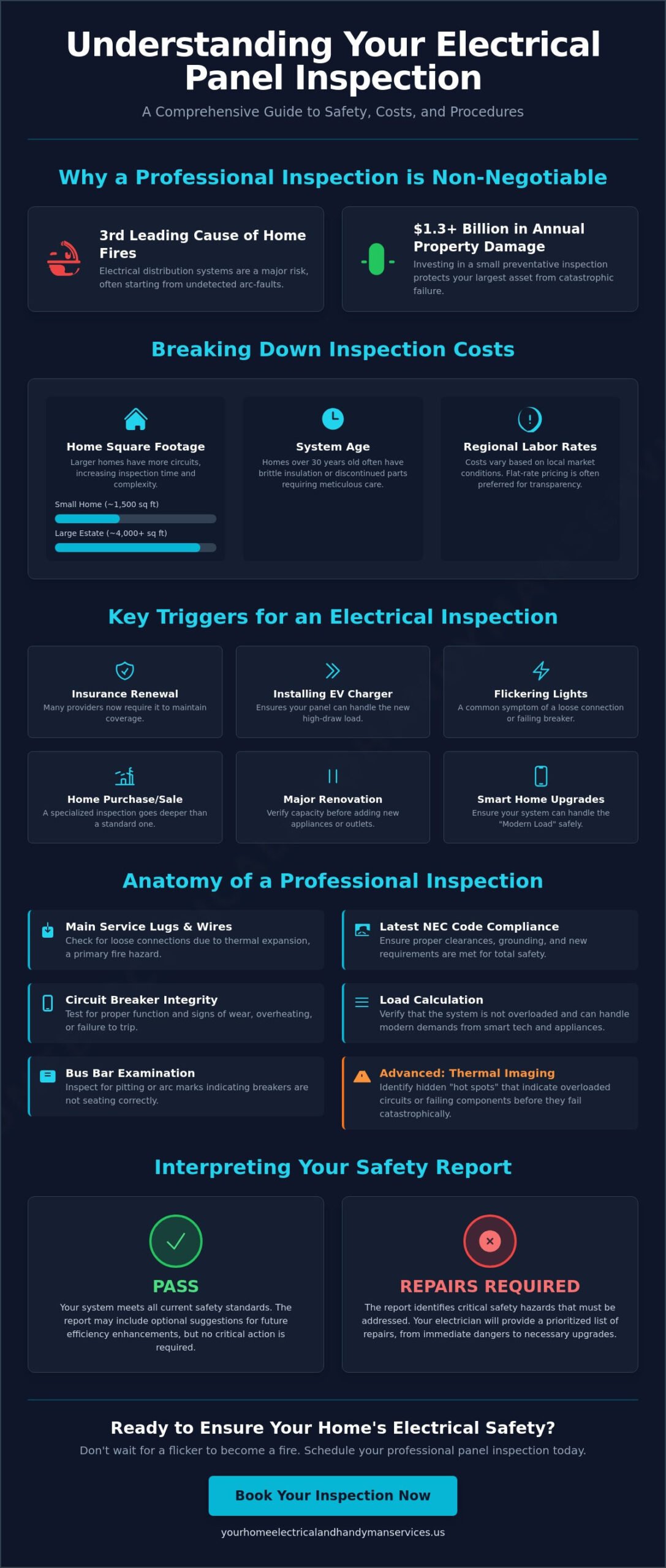
Did you know that electrical distribution systems are the third leading cause of home structure fires in the United States, resulting in over $1.3 billion in property damage annually? It’s a sobering reality that often starts with a small, undetected arc-fault behind your drywall. You’re likely looking into the electrical panel inspection cost because you’ve noticed a flickering light or simply want to ensure your family’s safety. It’s a smart move that prioritizes long-term reliability over temporary fixes.
We understand that inviting a technician into your home can feel stressful, especially when you’re worried about fluctuating rates or unnecessary repair recommendations. You deserve transparency and professional assurance. In this 2026 guide, we’ll explain exactly what factors influence current market pricing and how this small preventative step protects your property from catastrophic failure. We’ll also walk through the 2026 National Electrical Code updates and provide a clear checklist of what a qualified inspector should actually do during their visit. This guide ensures you have the information needed to keep your home safe and your electrical system running at peak performance.
Key Takeaways
- Learn why a specialized panel diagnostic differs from a standard home inspection and how the 2026 National Electrical Code (NEC) defines modern safety standards.
- Get a transparent breakdown of the electrical panel inspection cost in 2026, including how your home’s square footage and regional labor rates impact the final price.
- Identify the “Modern Load” rule and the specific triggers, like insurance renewals or new EV charger installations, that make an inspection a non-negotiable priority.
- Follow our step-by-step walkthrough of a professional assessment to ensure your technician is thoroughly checking internal wiring and arc-flash hazards.
- Gain the confidence to read a “Pass/Fail” safety report, allowing you to prioritize critical repairs over optional system enhancements.
What is an Electrical Panel Inspection and Why Does it Cost Money?
Many homeowners confuse a professional electrical diagnostic with the standard walk-through performed during a home sale. While a general home inspector might check if your lights turn on or if outlets have power, a licensed electrician performs a deep-dive technical assessment. Think of a professional electrical panel inspection as a comprehensive physical for your home’s central nervous system. This process involves opening the equipment, testing individual components, and ensuring every wire meets the rigorous safety standards of the 2026 National Electrical Code (NEC).
You aren’t just paying for someone to “look” at your wires. You’re investing in a specialized skill set that identifies microscopic hazards before they become house-level emergencies. A simple visual check can’t detect a failing breaker or a loose connection that’s slowly generating heat behind the metal cover. When you evaluate the electrical panel inspection cost, you’re also paying for professional liability and insurance coverage. Licensed electricians carry the weight of accountability; if they miss a critical flaw, their professional standing and insurance protect your property. This level of assurance is something a DIY approach or a general handyman simply cannot provide.
The technical hub of your home is the distribution board, which acts as the gatekeeper for all incoming electricity. In 2026, the complexity of these boards has increased significantly with the rise of smart home technology and high-draw appliances. A professional inspection ensures that your system can handle these modern loads without violating the latest safety protocols, such as the updated 2026 NEC requirements for working space clearance and outdoor service disconnects.
The Components Under the Microscope
During the diagnostic, an electrician focuses on several high-risk areas. They evaluate the main service lugs where power enters the home to ensure connections haven’t loosened due to thermal expansion. The inspector also examines the bus bar for “pitting” or evidence of arcing, which indicates that breakers aren’t seating correctly. Advanced inspections often include thermal imaging to identify heat signatures that suggest a circuit is overloaded or a breaker is losing its trip-sensitivity, even if it hasn’t failed yet.
This level of detailed technical analysis is standard for experienced contractors like Underline Energy Concepts, who focus on ensuring that every part of a home’s energy infrastructure is both safe and optimized for performance.
The Difference Between Residential and Commercial Scopes
The electrical panel inspection cost often varies based on the property type. Commercial inspections involve higher voltages and more complex three-phase systems, requiring specialized testing equipment. In the Richmond and Katy areas, multi-family units often have specific local requirements for shared service equipment and fire-rated enclosures. Additionally, modern smart homes require detailed load calculations to ensure that new additions, like EV chargers or smart panels, won’t cause a system-wide failure during peak usage periods.
Breaking Down Electrical Panel Inspection Cost in 2026
Understanding the electrical panel inspection cost requires looking beyond a single number. While national averages in 2026 generally fall within a specific range for standard assessments, regional labor markets like Greater Houston can influence the final bill. Most Texas electricians use either a flat-rate model or a travel fee plus hourly rate. Flat-rate pricing is typically preferred by homeowners because it provides a clear, upfront cost regardless of how long the technician spends at the property. This transparency helps alleviate the worry that an inspection might turn into an open-ended financial commitment.
Your home’s size directly impacts the duration of the diagnostic. A 1,500-square-foot cottage has fewer circuits to test than a 4,000-square-foot estate in Sugar Land. Additionally, homes built more than 30 years ago often require more intensive labor. These older systems may feature discontinued components or brittle insulation that demands a slower, more meticulous approach to ensure everything aligns with the current National Electrical Code (NEC). If you’re planning a major project like an electrical panel upgrade, starting with a comprehensive diagnostic is the most reliable way to map out your needs.
Standard vs. Advanced Diagnostic Pricing
A basic inspection covers the visual and mechanical integrity of the breakers and bus bars. However, many 2026 homeowners opt for advanced diagnostics like infrared thermal imaging. This technology identifies hidden “hot spots” that the naked eye cannot see, often adding a predictable surcharge to the base rate. A truly professional report should also include digital photos and a clear itemization of any safety concerns, providing you with a permanent record for insurance or future home sales.
Regional Factors for Richmond, Katy, and Sugar Land
The local Texas climate plays a silent but significant role in your system’s health. Extreme summer heat in Katy and high humidity in Rosenberg can accelerate the corrosion of copper components and stress circuit breaker mechanisms. These environmental factors often mean that local inspections take slightly longer as technicians look for signs of moisture intrusion or heat-related fatigue that wouldn’t be as prevalent in drier climates. Furthermore, local permit and code compliance fees in specific municipalities can occasionally influence the total investment required for a certified safety report.
When Should You Invest in an Inspection?
Electrical demands have shifted dramatically over the last few decades. In 1990, the average household powered a few appliances and a television. In 2026, our homes are filled with high-draw smart devices, dedicated home offices, and sophisticated networking gear. For those managing a business from home, integrating a safe power supply with professional Managed IT Services Pearland TX is key to maintaining productivity. This shift is what professionals call the “Modern Load” rule. While older guidelines might suggest waiting a decade between checks, the increased stress on your wiring means more frequent assessments are necessary. The U.S. Consumer Product Safety Commission has consistently advocated for proactive home safety to prevent electrical fires. Staying ahead of these issues helps you manage the electrical panel inspection cost by identifying minor maintenance needs before they escalate into total system failures.
Certain milestones make an inspection a mandatory requirement rather than a suggestion. Real estate transactions are a primary trigger, as both lenders and buyers need documented proof that the home’s electrical system is up to code. Insurance providers are also tightening their standards. Many companies now require a certified safety report before renewing policies, especially for homes with older equipment. If an inspector finds that your system is struggling, this report provides the data needed to calculate the cost to upgrade electrical panel components effectively.
Living on the Gulf Coast adds another layer of necessity. High-wind events and tropical storms can cause subtle structural shifts or moisture intrusion in outdoor service equipment. Establishing a post-storm protocol ensures that your panel remains watertight and that no salt-air corrosion is compromising your breakers. It’s a small step that provides massive peace of mind during our intense hurricane seasons.
Red Flags That Demand Immediate Inspection
You don’t always need a calendar to tell you when it’s time for a checkup. If your lights flicker whenever the air conditioner or clothes dryer kicks on, your system is likely reaching its capacity. You should also stay alert for signs I need a new electrical panel, such as persistent buzzing sounds or a faint smell of burning plastic near the box. Breaker handles that feel warm to the touch or show signs of discoloration are critical warnings of active arcing. These symptoms require immediate professional attention to prevent damage to your appliances or your home.
Preparing for Major Home Upgrades
Before you invest in new technology, you must ensure your infrastructure can support it. Installing a Level 2 EV charger, for instance, adds a significant continuous load that older panels weren’t designed to handle. An inspection will determine if a 200 amp panel upgrade Texas homeowners frequently require is necessary for your project. This same logic applies to adding pool equipment, hot tubs, or high-powered workshop tools. A professional diagnostic ensures your new investments won’t compromise your home’s safety.
What Happens During a Professional Inspection?
A professional diagnostic is a methodical process that requires specific tools and technical expertise. When you invest in the electrical panel inspection cost, you’re paying for a systematic evaluation that follows a strict safety protocol. It begins with a visual assessment of the panel’s exterior. The inspector verifies that there is adequate clearance around the equipment, ensuring that no obstructions prevent emergency access or proper ventilation. This initial check also looks for physical damage to the enclosure, such as rust or impact marks, which could compromise the internal components.
Once the environment is cleared, the technician removes the dead front cover. This exposes the internal wiring. Here, the inspector looks for signs of double-tapping, improper wire gauges, or damaged insulation. A critical part of this phase is torque testing. Over time, vibrations and thermal expansion can loosen the screws holding your wires in place. By verifying that every terminal connection is tightened to the manufacturer’s specifications, the inspector prevents the high-resistance connections that frequently lead to electrical fires. This level of detail is what separates a professional diagnostic from a basic home walk-through.
The Infrared Advantage
Advanced diagnostics often utilize thermal imaging cameras to identify issues that are invisible to the naked eye. These cameras detect the heat signatures generated by overloaded circuits or loose connections behind the insulation. Heat is the first sign of electrical failure, often appearing weeks before a breaker trips. By using infrared technology, an electrician can pinpoint “silent” hazards before they cause a system-wide failure. This preventative approach is the most effective way to ensure your home’s safety. If your inspection reveals aging components that can no longer handle your household’s power needs, you may want to schedule a professional consultation to discuss your options.
Testing for Proper Grounding and Bonding
In regions like Texas, where lightning and power surges are common during storm season, the grounding electrode system is your home’s primary defense. The inspector verifies that your panel is correctly bonded, ensuring that the neutral and ground bars are connected according to code. They also check the integrity of the ground rod and its connection to the main service. Finally, the technician evaluates the effectiveness of any existing surge protection devices. This ensures that a sudden voltage spike won’t damage your expensive electronics or smart home devices.
The process concludes with a comprehensive safety report. This document provides a prioritized list of recommendations. You’ll see which items are “Critical” safety hazards that need immediate attention and which are “Recommended” improvements for long-term system health. This transparency ensures that you aren’t pressured into unnecessary work while maintaining a clear path to a safer home.
Interpreting Your Report: Repairs vs. Full Replacements
Receiving your final safety report can feel overwhelming if you don’t know how to prioritize the findings. A professional diagnostic doesn’t just list problems; it provides a roadmap for your home’s infrastructure. Most reports categorize findings into “Critical” and “Recommended” sections. Critical items are immediate safety hazards that violate the National Electrical Code or pose an active fire risk. Recommended items are often focused on efficiency, future-proofing, or minor wear that doesn’t yet compromise the system. When you consider the electrical panel inspection cost, the most significant value comes from this expert prioritization, which prevents you from overspending on non-essential fixes.
Sometimes, a simple repair like replacing a single faulty breaker or tightening a loose lug is all that’s required to restore safety. However, we use the “Rule of Three” to help homeowners decide when a repair is no longer a sound investment. If your report identifies three or more major issues, such as evidence of internal arcing, a lack of proper grounding, and a documented history of circuit overloads, a full system change is usually the most cost-effective path. In these cases, moving forward with an electrical panel upgrade Richmond TX ensures your home meets 2026 safety standards and provides the capacity needed for modern living.
Safety Recalls and Obsolete Equipment
Certain brands of electrical equipment are known to be “too far gone” for simple repairs. If your inspection reveals a Federal Pacific (FPE) or Zinsco panel, the recommendation will always be immediate removal. These specific brands have high failure rates and documented safety recalls because their breakers often fail to trip during an overcurrent event. Furthermore, many insurance companies in the Texas Gulf Coast region will refuse to renew policies or will significantly increase premiums for homes with these obsolete systems. Because replacement parts for these panels are no longer manufactured, attempting a repair is often impossible and unsafe.
Choosing a Local Expert in Richmond and Katy
The accuracy of your report depends entirely on the expertise of the person performing the diagnostic. You should always hire a licensed Master Electrician who understands the specific environmental challenges of the Richmond and Katy areas. Before booking, verify the technician’s Texas TDLR license number and ensure they carry comprehensive professional liability insurance. This level of verification protects your property and guarantees that your safety report will be accepted by insurance providers and home buyers alike. Ready to secure your home’s electrical system? Schedule your professional electrical panel inspection with Your Home Electrical and Handyman Services LLC today to get a clear, honest assessment of your home’s safety.
Secure Your Home’s Future with a Professional Diagnostic
You now have the tools to understand how your home’s infrastructure handles the demands of 2026 technology. A professional diagnostic is more than a simple checklist; it’s a vital safeguard against undetected hazards like arcing or loose terminal connections. While the electrical panel inspection cost is a minor upfront investment, the clarity it provides regarding your system’s health is invaluable for long-term property protection.
Our team of licensed and insured Texas electricians has been serving the Richmond, Katy, and Sugar Land communities since 2021. As A+ rated local experts, we prioritize transparency and thoroughness in every safety report we provide. Don’t leave your family’s safety to chance or outdated equipment. Book Your Professional Electrical Safety Inspection Today to ensure your power system remains reliable and code-compliant.
Taking this proactive step today means you can rest easy knowing your home is prepared for whatever the future brings. We’re here to help you maintain a safe, efficient, and dependable electrical system for years to come.
Frequently Asked Questions
How long does a typical electrical panel inspection take?
A standard inspection typically takes between 1 and 2 hours to complete. This duration depends on the size of your property and how easily the technician can access the main panel and any sub-panels. Older homes with complex or unlabelled wiring might require additional time for a thorough diagnostic. We ensure every breaker and connection is tested without rushing the process to guarantee your home’s safety.
Will the electrician have to turn off my power during the inspection?
Yes, you should expect a brief power interruption during a professional diagnostic. While visual checks and thermal imaging can be done while the system is live, the technician must often de-energize the panel to safely perform torque testing on terminal connections. We coordinate with you to ensure this downtime is minimal and scheduled at a convenient moment during the visit to avoid disrupting your daily routine.
Is an electrical panel inspection included in a standard home inspection?
A standard home inspection only includes a basic visual review of the panel, which is not the same as a specialized electrical diagnostic. General inspectors check for obvious defects but lack the tools and licensing to perform load calculations or internal torque checks. To truly understand your electrical panel inspection cost and system health, you need a licensed electrician to remove the cover and inspect the internal components according to the latest codes.
Can I perform my own electrical panel inspection to save on costs?
We strongly advise against performing your own inspection due to the high risk of electrocution and arc-flash hazards. Opening a live panel without professional training and personal protective equipment is dangerous. Additionally, insurance companies and local building departments typically require a report signed by a licensed Master Electrician to verify that the system meets current National Electrical Code safety standards. Saving on labor isn’t worth the physical risk.
How much does a commercial electrical inspection cost compared to residential?
Commercial inspections are generally more expensive than residential ones because they involve higher voltage systems and three-phase power configurations. The complexity of commercial buildings often requires specialized testing equipment and more time to evaluate multiple distribution boards and complex circuitry. While residential checks focus on household safety, commercial diagnostics must also account for industrial load requirements and stricter workplace safety regulations that demand a more intensive review.
What happens if my electrical panel fails the safety inspection?
If your panel fails, you’ll receive a detailed report categorizing the issues as either “Critical” or “Recommended.” Critical failures, such as active arcing or recalled components, require immediate attention to prevent fire hazards. Our experts will provide a clear explanation of the necessary repairs or upgrades, helping you prioritize work that ensures your home remains safe and compliant with local Texas codes. We focus on providing solutions that restore your peace of mind.
Does an electrical panel inspection help lower my home insurance premiums?
Yes, many insurance providers offer discounts or lower premiums when you provide a certified electrical safety report. Proving that your system is up to date and free of recalled brands like Federal Pacific can make your home a lower risk to insure. Some companies in the Gulf Coast region actually require these inspections before they’ll issue or renew a homeowner’s policy, especially for properties that are more than 30 years old.
Are infrared thermal inspections worth the extra cost?
Infrared thermal inspections are highly recommended because they detect heat signatures that are invisible to the naked eye. This technology identifies loose connections and overloaded circuits that haven’t tripped a breaker yet but are already generating dangerous levels of heat. Including this in your electrical panel inspection cost is an effective way to catch “silent” hazards before they lead to a system failure or a house fire, providing a much deeper level of protection.