

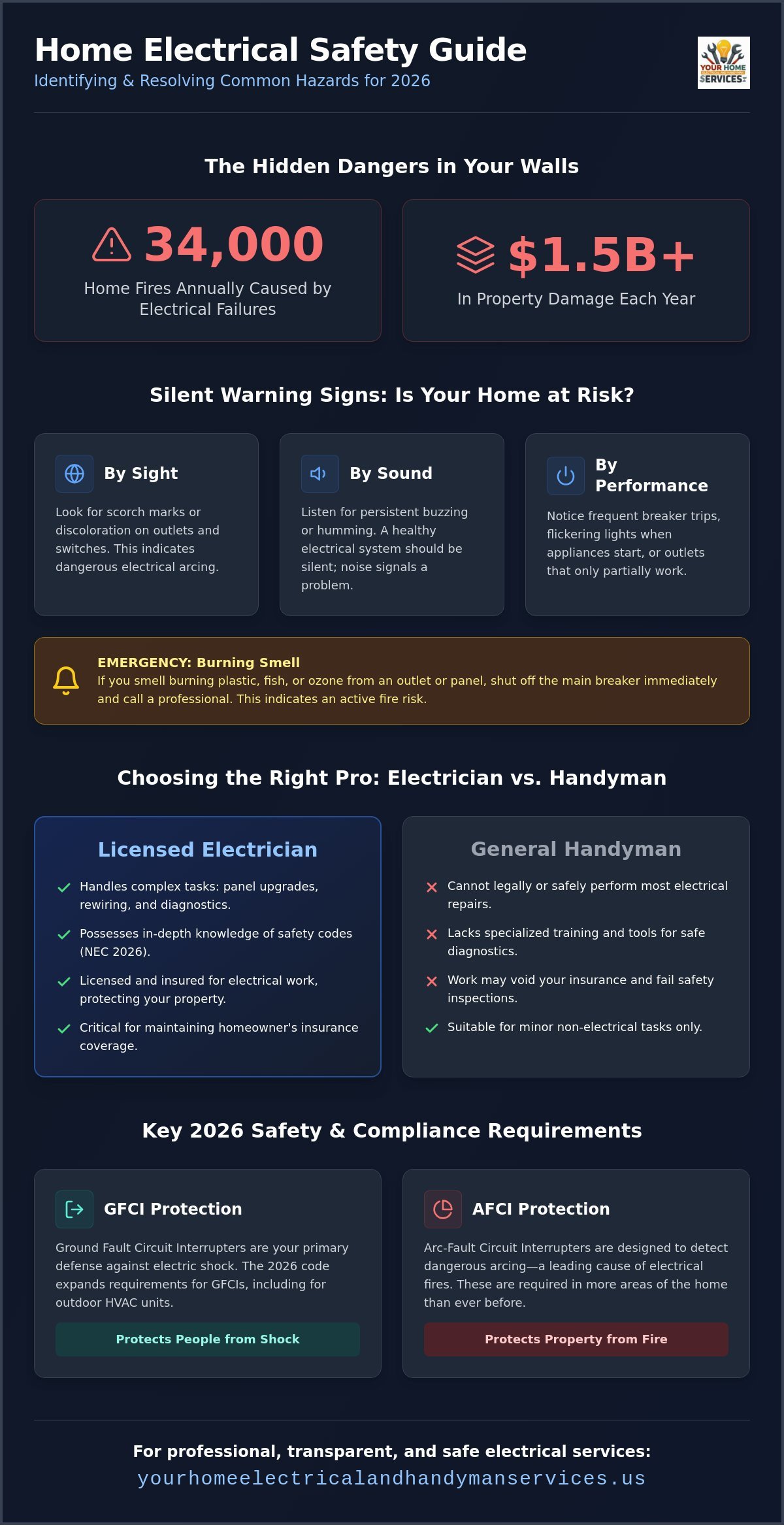
Did you know that electrical failures cause roughly 34,000 home fires every year, leading to over $1.5 billion in property damage? It’s completely natural to feel a sense of anxiety when you notice a flickering light or a warm outlet cover in your Richmond, Katy, or Sugar Land home. You want to keep your family safe, but it’s often difficult to tell if a minor glitch requires a major electrical repair or just a simple adjustment. You might even find yourself caught between the lower cost of a general handyman and the specialized expertise of a licensed technician.
We understand that you value both safety and transparency when it comes to your property. This guide is designed to give you total peace of mind by teaching you how to identify, prioritize, and resolve common household electrical issues using professional standards updated for 2026. You’ll learn the difference between various service levels, understand the newest GFCI requirements for outdoor units, and discover how to find a local expert who provides honest, project-based pricing. We will walk you through the essential diagnostics and safety checks that ensure your home remains functional and secure for years to come.
Key Takeaways
- Learn to identify “silent” warning signs like buzzing sounds and warm outlet covers before they escalate into major safety hazards.
- Understand the 2026 safety requirements for GFCI and AFCI protection to ensure your home remains compliant with the latest electrical codes.
- Discover why professional electrical repair is critical for maintaining your homeowner’s insurance coverage and preventing household fire risks.
- Identify the legal and practical differences between hiring a licensed electrician and a handyman for various home maintenance tasks.
- Gain clarity on transparent, project-based pricing models that eliminate the stress of hidden diagnostic fees during technical troubleshooting.
Recognizing the Signs You Need Electrical Repair
Texas homeowners face unique environmental challenges that can accelerate the need for electrical repair. The intense heat in areas like Richmond and Katy causes metal components to expand and contract significantly. This constant thermal stress eventually loosens the connections within your electrical wiring, leading to heat buildup and potential failure. While some issues are obvious, many dangerous faults remain hidden behind your drywall until they become critical. Understanding how to spot these early indicators can prevent costly damage and ensure your home remains safe.
Visual and Auditory Warning Signs
Look closely at your wall plates for any signs of discoloration. Brown or black scorch marks indicate that arcing is occurring behind the switch or outlet. Arcing happens when electricity jumps across a gap in a loose connection, creating temperatures hot enough to melt plastic and ignite surrounding materials. You should also listen for persistent buzzing or humming. A healthy electrical system is silent; any audible noise usually suggests a failing circuit breaker or a wire that has vibrated loose from its terminal. Flickering lights are another common concern that homeowners often dismiss. If a single lamp flickers, you likely have a bad bulb. However, if multiple lights in one room dim when you turn on a vacuum or the AC kicks in, you are dealing with a circuit overload or a loose neutral wire that requires professional intervention.
Performance Cues in Modern Homes
Modern households in 2026 utilize more high-draw electronics and smart devices than ever before. Frequent circuit breaker trips are a clear signal that your system is struggling to keep up with this demand. While a single trip might be caused by a faulty appliance, repeated issues mean the breaker itself is wearing out or the circuit is undersized for your needs. You might also encounter “half-hot” outlets where one plug works but the other remains dead. This typically points to a terminal failure inside the outlet body or a broken tab on the receptacle. Many signs I need a new electrical panel often start with these minor performance glitches, eventually leading to a complete lack of reliability as the internal components degrade.
Never ignore a burning smell, especially if it resembles the scent of ozone, fish, or burning plastic. If this odor is coming from your electrical panel or a specific wall, it is a sign of an active emergency. Intense heat from a failing connection is melting the insulation on your wires. In these moments, the risk of a house fire is at its highest. We recommend shutting off the main breaker immediately and seeking a professional assessment to locate the source of the heat before the damage spreads further.
Common Residential Electrical Repairs: From Outlets to Panels
Once you identify a symptom, the next step is diagnosing the specific component failure. Most electrical repair tasks focus on the points of use, such as outlets and switches, or the central distribution hub, which is your breaker panel. Maintaining these components ensures that electricity flows safely without creating high-resistance heat points. Using a Home Electrical Safety Checklist can help you audit these areas systematically before calling a technician to handle the technical work.
Outlet and Switch Troubleshooting
Ground Fault Circuit Interrupter (GFCI) outlets are your primary defense against electric shock in kitchens, bathrooms, and laundry rooms. If a GFCI trips and won’t reset, it’s often doing its job by detecting a ground fault. These devices contain sensitive internal circuitry that can wear out after several years of use. With the 2026 NEC updates requiring expanded GFCI protection for outdoor HVAC units, ensuring these devices are functioning correctly is more important than ever. Similarly, older homes in the Richmond area might still have outdated two-prong outlets. Upgrading these to grounded three-prong systems provides a dedicated path for fault current, protecting your expensive electronics. You should also pay attention to switches that feel “mushy” or produce a visible spark. This indicates that the internal contacts are no longer making a clean connection, which is a common cause of localized arcing.
Circuit Breaker and Panel Maintenance
Your breaker panel is the heart of your home’s electrical system. Over time, circuit breakers can experience “ghost” trips where they shut off power without a clear overload. This often happens because the internal bi-metal strip has weakened or the breaker has reached the end of its functional life. A critical yet overlooked part of maintenance involves the main lug. This is where the service wires from the utility connect to your panel. Because of the high current load, these lugs can loosen over time due to thermal expansion. Only a professional should handle tightening these, as they remain “live” even when the main breaker is off.
Sometimes, a simple fix isn’t enough. If your panel uses obsolete components that are no longer manufactured, it’s safer to invest in a professional electrical panel upgrade rather than searching for used, unreliable replacement parts. We also frequently encounter “open neutral” issues. This occurs when the neutral return path is interrupted, causing voltage to fluctuate wildly and potentially frying your appliances. If you’re noticing strange power surges, our team can provide expert electrical services in Texas to locate and secure loose connections in your junction boxes before they cause damage.
The Risks of Delayed Repair and DIY Electrical Work
Postponing a necessary electrical repair is a gamble with your property and safety. According to data from the Electrical Safety Foundation International (ESFI), home electrical fires result in roughly 500 deaths and $1.5 billion in property damage every year. While it’s tempting to wait until a small issue becomes a total failure, minor faults in Texas homes escalate quickly. Our local climate, characterized by high humidity and extreme summer temperatures, puts additional stress on aging insulation. This causes wires to become brittle, leading to dangerous arcing that a simple visual inspection won’t catch. Ignoring these early warnings allows a manageable fix to transform into a life-threatening hazard.
Fire Safety and Prevention
Arcing is one of the leading causes of residential fires in the Richmond and Katy areas. It occurs when electricity jumps between loose connections or through damaged insulation, creating intense heat. Modern safety standards rely on Arc-Fault Circuit Interrupters (AFCIs) to detect these specific patterns and shut down power before a fire starts. However, many older homes lack this protection. Professional diagnostics go far beyond looking at a wire; technicians use specialized tools to measure resistance and heat levels within your walls. A common but catastrophic DIY mistake is “over-fusing.” This happens when someone replaces a tripping 15-amp breaker with a 20-amp version. Because the wire gauge isn’t rated for that higher current, the wire itself begins to glow like a toaster element inside your drywall.
Legal and Financial Consequences
The financial risks of DIY electrical work often outweigh any initial savings. If a fire occurs and investigators find unpermitted or non-compliant wiring, your insurance provider may deny the claim entirely. You are then left responsible for the full cost of restoration. Texas law requires adherence to the 2026 National Electrical Code (NEC), and most cities require permits for modifications to the home’s permanent wiring. This legal trail is vital for your protection. When it’s time to sell your home, a professional electrical panel inspection ensures your system meets current standards. Inspectors will flag non-compliant DIY work, often forcing you to pay a professional to tear out and redo the repairs before the sale can close. Doing it right the first time preserves your property value and keeps your liability low.
Electrician vs. Handyman: Choosing the Right Pro in Katy & Richmond
Homeowners in Richmond and Katy often find themselves at a crossroads when a minor technical issue arises. You want the job done correctly, but you also want to manage your household budget effectively. In Texas, the distinction between a handyman and a licensed electrician is defined by both the complexity of the task and state law. Understanding these boundaries ensures your electrical repair is legal, safe, and cost-effective. Just as you need the right professional for your home, if you are navigating serious legal matters elsewhere, you can learn more about Law Office of Kevin Bessant & Associates. While a handyman excels at finishing touches and simple swaps, a licensed electrician is mandatory for any project that alters the home’s permanent wiring or structural power distribution.
When You Must Call a Licensed Electrician
Certain projects carry a high level of risk and require a deep understanding of load calculations and the 2026 National Electrical Code. You should always hire a licensed professional for any work involving your main breaker panel or the installation of new dedicated circuits. This includes specialized tasks like a EV charger installation, which demands a precise assessment of your home’s available amperage. Any repair that involves the service mast, the meter base, or troubleshooting complex flickering that spans multiple rooms also falls strictly into the electrician’s domain. These systems are under constant high tension and require specialized diagnostic tools to handle safely. It protects your liability and ensures your home remains insurable.
When a Handyman is the Better Fit
For many “electrical-adjacent” tasks, a skilled handyman is often the more practical and affordable choice. If you are simply replacing an existing light fixture or upgrading a ceiling fan in a room that already has the correct mounting box, a handyman can handle the swap efficiently. They are also the ideal choice for mounting a TV and hiding the low-voltage cables behind the wall to create a clean, modern look. One of the greatest advantages of using a hybrid service provider is the ability to perform drywall repair immediately after a technical fix. When a wire needs to be fished through a wall, it often requires a small access hole. A specialized electrician might leave you with a hole in your wall, but a hybrid pro can patch, texture, and paint the area before they leave your home.
Before hiring any contractor in Richmond or Katy, always verify their credentials. You can check the Texas Department of Licensing and Regulation (TDLR) website to ensure an electrician’s license is active and in good standing. Additionally, always ask for a certificate of insurance to protect your property during the project. If you are looking for a reliable partner who can handle both the technical wiring and the professional finishing touches, request a transparent project quote from our local team today. We take pride in providing a seamless experience that leaves your home both functional and beautiful.
Your Home Electrical: Comprehensive Repair and Restoration
When you hire Your Home Electrical and Handyman Services LLC, you aren’t just getting a technical fix. You’re getting a complete restoration of your property’s safety and appearance. Many companies finish the electrical repair and leave you with a hole in your wall or a messy workspace. We believe a job isn’t done until your home is safe and aesthetically perfect. Our approach combines licensed technical skill with the precision of a professional handyman, ensuring that every project meets the highest standards of reliability.
We use a “Diagnostic First” strategy for every call. Instead of chasing symptoms, we find the root cause of the fault to ensure we provide permanent solutions rather than temporary quick fixes. We also provide transparent, project-based pricing for all residents, so you know the total cost before the work begins. Our local service area includes Richmond, Katy, Sugar Land, and Rosenberg, ensuring we can reach you quickly when you need us most. We take pride in our commitment to local Texas building codes, providing peace of mind that your system is fully compliant and safe for your family.
Our Diagnostic and Repair Process
Our process is methodical and logical. It begins with a thorough assessment where we identify the specific failure point using modern diagnostic tools. Once the problem is located, we explain the solution clearly and provide a fixed-price quote. After the repair is complete, we perform rigorous safety testing to verify that the circuit is stable. We never leave a job site without a final cleanup, as we value your home as much as you do. This structured journey from problem identification to final solution is why local homeowners trust us with their most critical household systems.
Beyond the Wire: Restoration Services
Many electrical projects require cutting into walls to access wiring or install new junction boxes. While a standard electrician might leave that repair for you to figure out, we provide professional drywall patching as part of our comprehensive service. We match your existing texture and paint so your home looks like we were never there. This “one-stop” advantage saves you the stress of coordinating multiple contractors for a single project.
Repairs are also the perfect time to modernize your living space. We can assist with smart home device setup, integrating new technology into your freshly repaired system for better energy management. Local homeowners trust us because we provide the high-level expertise of a licensed technician with the versatile care of a professional handyman. Whether we are fixing a faulty outlet or upgrading your entire panel, our goal is to leave your home more functional and beautiful than we found it.
Securing Your Home with Professional Electrical Care
Maintaining a safe and reliable electrical system is one of the most important responsibilities of homeownership. By recognizing early warning signs like buzzing outlets or flickering lights, you can address issues before they become hazardous. We have explored how professional diagnostics and timely electrical repair protect your family from fire risks and ensure your property remains compliant with the 2026 National Electrical Code. Choosing a provider that handles both technical wiring and the resulting drywall restoration ensures your home looks as good as it functions.
Your Home Electrical and Handyman Services LLC has provided 5-star local handyman and electrical expertise to our neighbors since 2021. Our licensed and insured technicians are ready to bring stability and safety back to your property. Schedule your professional electrical repair in Richmond or Katy today! We are proud to serve Richmond, Katy, and Sugar Land with transparent, project-based solutions. Let us help you keep your home running smoothly and safely for years to come.
Frequently Asked Questions
How much does the average electrical repair cost in Richmond, TX?
The total cost for a professional fix depends on several variables, including the complexity of the diagnostic process and the specific materials required for the job. Factors like the age of your home’s wiring and the accessibility of the fault location will influence the final price. We prioritize transparent, project-based quotes so you know the full investment before work begins, rather than worrying about fluctuating hourly labor rates.
Why is my circuit breaker tripping even after I unplug everything?
A breaker that continues to trip with no appliances connected usually indicates a short circuit within your home’s permanent wiring or a mechanical failure of the breaker itself. It’s also possible that a wire has vibrated loose inside the service panel due to thermal expansion. This situation requires a professional electrical repair to safely locate the fault and prevent a potential fire hazard within your walls.
Can a handyman legally replace a light switch or outlet in Texas?
Yes, a handyman can generally perform “plug-and-play” replacements of existing switches, outlets, and light fixtures in Texas. However, they are legally restricted from installing new dedicated circuits or modifying the footprint of your home’s permanent wiring. If your project involves troubleshooting a recurring fault or upgrading your system to meet the 2026 National Electrical Code, you must hire a licensed electrician to ensure the work is compliant.
What should I do if I smell something burning but can’t find the source?
You should immediately turn off the main breaker to your entire house to stop the flow of electricity. A burning smell often indicates that wire insulation is melting or a connection is arcing behind a wall or in the attic. Once the power is disconnected, a technician can use thermal imaging and resistance testing to find the specific point of failure before it develops into an active structure fire.
How often should I have my home’s electrical system inspected?
Most experts recommend a comprehensive safety inspection every three to five years for modern homes. If your property was built before 2001 or you have recently noticed performance issues like flickering lights, an annual check is a safer choice. Regular inspections ensure your system is capable of handling the increased power demands of 2026 smart home technology and remains compliant with the latest safety standards.
Is it safe to use an outlet that has visible sparks when I plug something in?
No, persistent or large sparks are a clear sign of worn-out internal contacts or loose terminal screws within the receptacle. While a tiny blue spark can occasionally happen when a high-draw device is first connected, frequent sparking creates localized heat that can ignite the outlet box. This issue requires an immediate electrical repair to replace the damaged outlet and inspect the surrounding wires for heat damage.
Do I need a permit for minor electrical repairs in Katy, TX?
Simple maintenance tasks like swapping an existing light fixture or outlet typically don’t require a permit in Katy. However, a permit and subsequent inspection are mandatory for any work that adds new wiring, alters the service panel, or involves the installation of an EV charger. You should always verify current local requirements with the City of Katy building department to ensure your project follows the 2026 National Electrical Code.
What is the difference between a repair and a panel upgrade?
A repair is a targeted fix for a specific failed component, such as replacing a single faulty breaker or securing a loose neutral wire. In contrast, a panel upgrade is a full replacement of the distribution hub to increase your home’s total amperage. Upgrades are necessary when your current system is obsolete, full, or unable to support modern high-draw additions like recessed lighting or energy management systems.