

What if your outdoor lighting could actually lower your monthly bills while making your property the safest on the block? Many Texas homeowners deal with the same frustrations: high electricity costs from outdated bulbs and fixtures that simply can’t handle the intense heat and humidity. You want a home that looks stunning at night, but you don’t want to compromise on safety or your budget.
This 2026 guide will show you how a professional outdoor lighting installation can transform your property into a secure, energy-efficient sanctuary. By moving to modern LED technology and smart controls, you can eliminate dark spots and boost your curb appeal simultaneously. We’ll walk you through the essential technical details, from the benefits of warm architectural tones to staying compliant with the 2023 National Electrical Code and local Texas “dark sky” standards. You’ll gain the clarity needed to make an informed decision for your home’s long-term value and safety.
Key Takeaways
- Learn how a professional outdoor lighting installation integrates security, safety, and aesthetics into a single, cohesive system for your home.
- Understand the essential differences between 120V line voltage and 12V low voltage to choose the most energy-efficient electrical foundation.
- Discover why UL-rated brass and copper fixtures are necessary to survive the intense heat and humidity of the Richmond and Katy climates.
- Explore strategic design techniques that highlight your home’s architecture while remaining compliant with local Texas “dark sky” ordinances.
- Find out how professional engineering prevents common issues like voltage drop and flickering, ensuring your lighting investment lasts for years.
Understanding the Impact of Professional Outdoor Lighting Installation
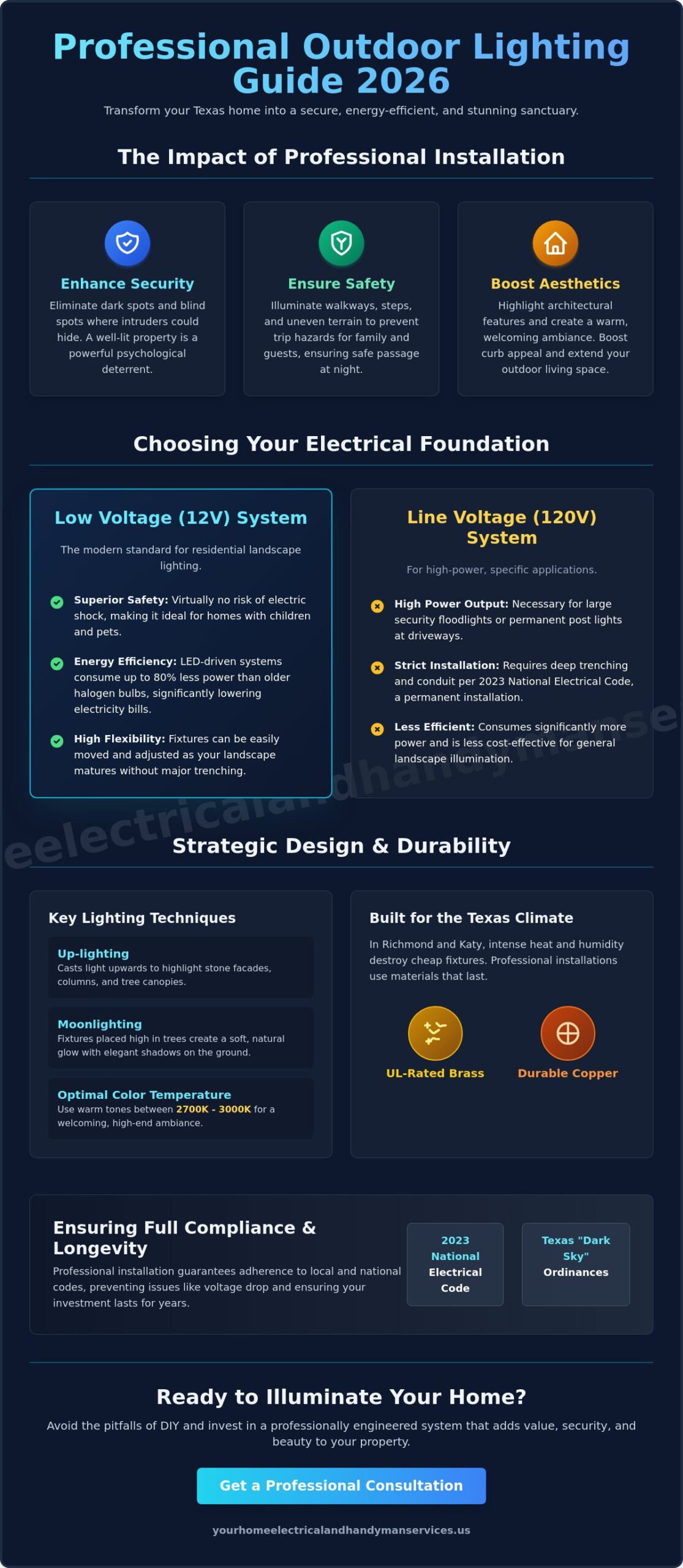
Professional Landscape lighting is more than just a set of scattered bulbs. It’s a carefully engineered system of high-quality fixtures, durable wiring, and intelligent controllers designed to work together. Many homeowners start with inexpensive solar kits from big-box stores, but these often fail after a single Texas summer. A professional outdoor lighting installation provides a permanent solution that withstands humidity and heat while delivering consistent performance. This system serves three primary roles: protecting your property, ensuring safe movement, and showcasing your home’s best features.
In 2026, the value of a well-lit exterior goes beyond simple visibility. It’s a strategic upgrade that significantly boosts curb appeal and property value. Unlike ‘plug-and-play’ options, a hardwired system allows for precise control over light intensity and placement. This level of detail ensures that your home doesn’t just look bright; it looks professionally designed. By using components built for longevity, you avoid the cycle of replacing cheap fixtures every season.
Enhancing Home Security and Safety
Security begins where the light reaches. By eliminating deep shadows and blind spots where intruders might hide, strategic floodlighting acts as a powerful deterrent. It’s a psychological barrier; a well-lit home suggests a property that’s well-maintained and monitored. Beyond security, safety is a practical necessity. Illuminating walkways, porch steps, and uneven garden terrain prevents trip hazards for your family and guests. Proper outdoor lighting installation ensures that every transition from the driveway to the front door is clear and safe, even on the darkest nights.
The Aesthetic Value of Landscape Lighting
The right lighting transforms a house into a landmark. Using ‘up-lighting’ techniques, you can highlight the unique architectural textures of Richmond and Katy homes, such as stone facades or tall entryways. Many homeowners now opt for warm, natural tones between 2700K and 3000K to create a welcoming ambiance. Moonlighting involves placing fixtures high in trees to cast a soft glow downward, creating elegant shadows on the ground below. To ensure your canopy is healthy enough for these installations, you can learn more about We Love Trees and their professional arborist services. This doesn’t just improve the view from the street. It extends your usable living space. By lighting up patios and decks, you create an inviting atmosphere that allows you to enjoy the Texas evenings long after the sun goes down.
Low Voltage vs. Line Voltage: Choosing the Right Electrical Foundation
Choosing the right power source is the most critical technical decision in any outdoor lighting installation. Most residential projects rely on low-voltage (12V) systems, but certain high-demand areas require a standard line-voltage (120V) connection. Understanding the difference ensures your system is both safe and cost-effective. A low-voltage setup uses a transformer to step down your home’s 120V power to a safer 12V level. This conversion is what makes modern energy-efficient outdoor lighting possible for the average backyard.
When to Use Line Voltage Systems
Line-voltage systems are the heavy lifters of exterior electrical work. You’ll typically see these used for permanent post lights at the end of a driveway or high-output security floodlights that need to cover vast areas. Because they carry the same current as your indoor wall outlets, safety requirements are much stricter. As of January 1, 2024, the City of Katy has adopted the 2023 Edition of the National Electrical Code, which mandates specific conduit and deep-trenching standards for 120V lines. These systems are permanent and less flexible than their low-voltage counterparts, but they’re necessary for high-wattage needs.
The Benefits of Low-Voltage LED Lighting
Low-voltage lighting is the current standard for landscape design for several reasons. It’s significantly safer for households with children or pets since the lower voltage carries almost no risk of dangerous shock if a wire is accidentally nicked. It also offers incredible flexibility. As your Texas landscaping grows and matures, you can easily move or adjust fixtures without digging new deep trenches. Most importantly, LED-driven 12V systems consume a fraction of the power of traditional halogen bulbs. This is a major advantage given the energy standards of 2026, where efficiency is a top priority for most homeowners.
Smart Integration: Photocells and Timers
Modern systems go beyond a simple wall switch. One of the biggest trends in Texas is the adoption of smart controls that offer precision and convenience. Photocells can automatically trigger your lights at dusk and turn them off at dawn, ensuring you never waste energy during daylight hours. You can also integrate your system with smart home hubs like Ring or Nest to create custom schedules. If you’re looking to streamline your property, a professional smart home device setup can help you manage your exterior lights from your phone. This allows you to zone your lighting, dimming garden accents while keeping security paths bright, all while reducing late-night energy waste.
Strategic Design: Balancing Security, Safety, and Curb Appeal
A successful outdoor lighting installation requires more than just high-quality hardware; it demands a strategic design that respects both your property and your neighbors. One common mistake is over-lighting, which creates harsh glare and contributes to light pollution. Official guidance on energy-efficient outdoor lighting emphasizes that a successful plan balances utility with environmental responsibility. In Texas, this is particularly relevant as many areas, including Katy, have specific “Outdoor Lighting Standards” within their zoning ordinances. These rules often encourage “dark sky” practices that keep light directed downward and minimize waste.
Professional design relies on layering light to create depth. You shouldn’t rely on a single bright source to do all the work. Instead, combine ambient lighting for general visibility, task lighting for specific activities like grilling, and accent lighting to highlight architectural details. Color temperature also plays a major role in the final look. Most homeowners in 2026 prefer warm, natural tones between 2700K and 3000K. These temperatures create a welcoming, upscale feel, whereas higher Kelvin ratings can look overly clinical or bluish, which often clashes with traditional Texas residential styles. If you’re also updating your home’s interior to match this modern aesthetic, exploring recessed lighting in Katy TX is a natural next step to create a seamless transition between your indoor and outdoor spaces.
Essential Lighting Zones for Texas Homes
Mapping your property into zones ensures every area serves its purpose. The perimeter should focus on security, often utilizing high-mounted motion sensors that act as active deterrents without staying on all night. The entryway requires a different approach; it needs warm, steady light that guides guests to the front door without blinding them. Finally, the backyard should be treated as an extension of your home. Functional task lighting is essential for outdoor kitchens and pool areas, while softer accent lights can define the edges of your property to make the space feel larger and more secure.
Techniques for Professional Results
Achieving a high-end look comes down to the specific techniques used during the outdoor lighting installation. Grazing is a popular method where lights are placed close to a surface, such as a stone or brick wall, to highlight its natural texture. Silhouetting creates a more dramatic effect by placing lights behind decorative plants or trees, casting their shapes against the side of the house. For walkways, avoid the “airport runway” look by staggering path lights on alternating sides of the trail. This provides enough light for safety while maintaining a soft, natural flow that enhances your home’s curb appeal.
The Installation Process: Weatherproofing for the Texas Climate
Texas weather is relentless. High humidity near the Gulf Coast and scorching summer temperatures can quickly degrade an outdoor lighting installation if the wrong materials are used. Professional-grade systems rely on UL-rated components specifically tested for wet locations. Unlike the plastic fixtures found in big-box stores, which often become brittle and crack under the intense sun, professional-grade brass or copper fixtures remain structurally sound for decades. These metals develop a natural patina over time, protecting the internal electronics from the elements while maintaining an upscale appearance.
A durable system requires more than just good fixtures. It needs an electrical foundation that can withstand soil expansion and moisture. If you’re concerned about your home’s current capacity to support new exterior features, you may need an electrical panel upgrade to ensure your circuits can handle the additional load safely and reliably. Starting with a solid power source prevents flickering and premature transformer failure.
Step-by-Step Installation Workflow
A methodical approach prevents technical failures down the line. First, we mount the transformer in a protected area and calculate the total wattage capacity. This ensures the system operates within safe limits. Next, we begin trenching. We lay direct-burial wire according to National Electrical Code (NEC) standards. As of early 2024, these standards require specific depths to prevent accidental damage during future gardening or lawn maintenance. One of the most critical steps is the connection. We use waterproof, gel-filled wire nuts for every fixture. These connectors prevent moisture from creeping into the copper strands, which is the leading cause of corrosion in humid environments.
Texas-Specific Durability Considerations
Texas soil and storms present unique challenges. The intense heat means we must select heat-resistant wiring that won’t degrade when soil temperatures exceed 100°F. Proper drainage is another priority. Ground-mounted fixtures need a gravel base or slightly elevated positioning to avoid being submerged during heavy rainstorms. Additionally, we recommend integrated surge protection. Texas thunderstorms often cause power spikes that can fry sensitive LED drivers. Protecting your investment from these surges is just as important as the initial outdoor lighting installation itself. By addressing these local factors, you ensure your lighting stays bright regardless of the weather.
Why Professional Installation Beats the DIY Approach in Richmond and Katy
A weekend DIY project might seem like a cost-saving measure, but a professional outdoor lighting installation requires technical precision that store-bought kits simply don’t provide. Many homeowners in Richmond and Katy find that after a few months, their lights begin to flicker or lose brightness. This is often due to voltage drop. This happens when the electrical current weakens as it travels further from the power source. A professional knows how to calculate wire gauges and transformer loads to ensure every fixture receives consistent power. Beyond performance, there’s the critical matter of safety. Working with an expert ensures your system meets the 2023 National Electrical Code standards, protecting your home from electrical faults.
This commitment to technical excellence is shared by reputable firms like Inlightec Electrical Solutions, who focus on delivering reliable electrical work for both residential and commercial properties.
Local expertise is also a factor. Homes in Sugar Land and Rosenberg often have specific electrical layouts that require a seasoned eye to navigate. A professional doesn’t just stick lights in the ground; they evaluate your entire electrical system. If your home is older or you’ve recently added high-demand appliances, you might need an electrical panel upgrade to support the new load. This holistic approach prevents tripped breakers and ensures your new investment doesn’t strain your home’s existing infrastructure.
The Risk of Improper DIY Wiring
Improper wiring is more than just a nuisance. It’s a safety risk. Overloaded transformers can overheat, creating a fire hazard near your home’s exterior. Loose connections or poor weatherproofing often lead to ‘ghost’ outages. These are situations where lights fail intermittently during a typical Texas rainstorm, only to turn back on once the ground dries. These issues are incredibly difficult to track down without specialized diagnostic tools. Additionally, many high-end fixture manufacturers will void their warranties if the product wasn’t installed by a professional. Saving a few dollars upfront on labor can result in replacing expensive fixtures much sooner than expected. If you’re considering a smaller interior refresh alongside your exterior project, understanding when to hire a handyman to install new light fixtures versus a licensed electrician can help you avoid costly code violations and keep your home safe.
Your Home Electrical and Handyman Services Advantage
Choosing a local expert means your system is built for the specific conditions of Texas properties. We focus on providing stable, expert-led electrical solutions that stand up to the local climate. Our approach ensures that your outdoor lighting installation is integrated correctly and safely. We’re committed to the long-term reliability of your home, appearing as a business that values thoroughness over flashy shortcuts. We also provide tailored maintenance plans to keep your system shining year-round. This includes everything from checking connections to fixture re-aiming as your landscape grows and changes.
Ready to brighten your home? Schedule your outdoor lighting consultation today.
Secure and Brighten Your Property for the Years Ahead
Investing in your home’s exterior is about more than just visibility. It’s about creating a safe, efficient environment that stands up to the unique demands of the Texas climate. You’ve learned how a professional outdoor lighting installation balances energy-efficient LED technology with strategic design to eliminate security blind spots and highlight your home’s architecture. By prioritizing high-quality materials like brass or copper and ensuring strict code compliance, you avoid the frustrations of flickering lights and premature system failure.
As a locally owned Richmond small business, we’re dedicated to providing the stability and professional assurance your property needs. Our licensed and insured technicians bring deep expertise in energy-efficient LED solutions to every project, ensuring your system remains reliable for years to come. We’re ready to help you transform your home into a secure, welcoming sanctuary with a methodical approach that prioritizes your safety and satisfaction.
Book Your Professional Outdoor Lighting Installation in Richmond & Katy. Your home deserves a lighting system that is as dependable as it is beautiful.
Frequently Asked Questions
How much does it cost to run outdoor LED lighting monthly?
LED systems are extremely efficient, typically costing just a few dollars per month for an entire property. For example, a system with 10 LED fixtures uses about 50 to 100 watts of power total, which is less than a single old-fashioned incandescent floodlight. Since these lights often run on timers or photocells, you aren’t paying for electricity during daylight hours.
Do I need a permit for outdoor lighting installation in Richmond, TX?
Most low-voltage (12V) landscape lighting projects do not require a permit in Richmond. However, if your project involves a line-voltage (120V) installation or requires adding a new circuit to your home’s electrical panel, a permit is typically necessary to ensure compliance with local building codes. It is always best practice to consult with the local building department or a professional before starting any new wiring.
What is the difference between warm white and cool white for landscaping?
Warm white lighting (2700K to 3000K) creates a soft, yellowish glow that is ideal for residential landscapes and architectural highlighting. Cool white (4000K to 5000K) has a bluish tint that is better suited for high-visibility security areas or commercial parking lots. Most Texas homeowners prefer warm tones because they feel more welcoming and don’t wash out the natural colors of stone and brick.
Can I add more lights to my existing outdoor lighting system later?
You can add more fixtures to your system as long as your transformer has enough remaining wattage capacity. When we perform an outdoor lighting installation, we often recommend a transformer that can handle 20% to 30% more than the initial load. This “headroom” allows you to expand your garden lighting or add new path lights in the future without needing to replace the core power unit.
How do I protect my outdoor lights from Texas humidity and rain?
Protecting your system requires using fixtures with a high Ingress Protection (IP) rating, such as IP65 or higher, to keep moisture out. You should also ensure all wire connections are housed in waterproof, grease-filled junction boxes or sealed with heat-shrink tubing. Regular maintenance, such as clearing debris away from ground-level fixtures, prevents water from pooling around the seals during heavy Gulf Coast rainstorms.
Should I choose solar lights or hardwired lights for my backyard?
Hardwired lights are the superior choice for consistent, high-quality illumination regardless of the weather. While solar lights are easy to install, they often struggle to stay bright through the night, especially after overcast days or in shaded areas of your backyard. A hardwired outdoor lighting installation provides a stable power source that ensures your security and aesthetic lights perform at full brightness every single night.
What happens if a single LED bulb burns out in an integrated fixture?
If a bulb fails in a “drop-in” fixture, you simply replace the individual LED lamp. However, in an integrated fixture, the LED is part of the permanent circuitry, meaning you may need to replace the entire light head or the internal module. Most professional-grade integrated fixtures are designed to last 10 to 20 years, so failures are rare compared to cheap, consumer-grade alternatives. For simpler interior fixture swaps that complement your exterior upgrade, a qualified handyman to install new light fixtures can handle replacements safely and in line with current 2026 design trends.
How deep should outdoor lighting wires be buried for safety?
Low-voltage wires should be buried at least 6 inches deep to protect them from lawnmowers and standard gardening tools. For line-voltage (120V) systems, the National Electrical Code often requires depths of 18 to 24 inches depending on whether the wire is in a conduit. Proper depth is essential for safety and prevents the frustration of accidentally cutting a live wire while planting new flowers.
2 Responses