

Did you know that as of September 1, 2026, the State of Texas is adopting a new National Electrical Code that changes the safety standards for every fixture in your home? It is completely normal to feel a bit lost when trying to balance modern design with technical terms like lumens, Kelvins, and integrated LED circuits. You deserve a home that is both beautiful and energy-efficient, but the fear of electrical fires or failing a code inspection can make any upgrade feel stressful. Finding reliable lighting installation services is about more than just aesthetics; it is about the peace of mind that comes from knowing your wiring is handled by a professional who respects local regulations.
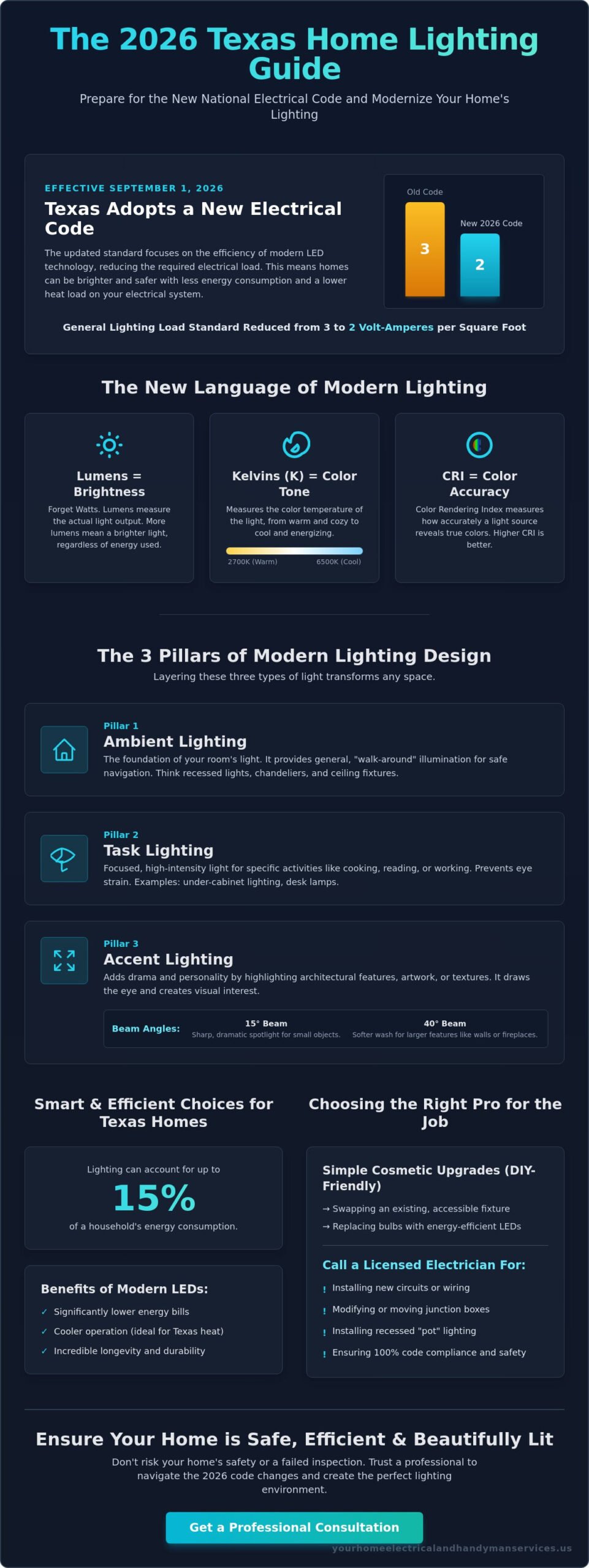
This guide will help you navigate the complexities of 2026 home lighting with expert advice on design and technical requirements. We will explore how to achieve a cozy, warm atmosphere using 2700K temperatures while staying compliant with the updated Texas lighting load standards of 2 volt-amperes per square foot. You will also learn how to choose a licensed expert who can ensure your installation lowers your utility bills and keeps your property safe for years to come.
Key Takeaways
- Master the three pillars of lighting design to transform flat, open-concept spaces into functional, multi-layered environments.
- Navigate the legal landscape of Texas electrical work by learning which lighting installation services require a licensed professional to ensure code compliance.
- Maximize your home’s energy efficiency and security by integrating smart lighting ecosystems that offer significant long-term ROI.
- Prepare for your project with a clear understanding of the technical process, including essential electrical load calculations for your panel.
- Differentiate between simple cosmetic upgrades and complex installations that involve new circuits or junction box modifications.
Understanding the Layers of Modern Lighting Design
Creating a functional and inviting home environment requires more than just mounting a single fixture in the center of a room. It requires a cohesive strategy. Modern Architectural lighting design relies on the principle of layering to eliminate harsh shadows and create visual interest. This is especially vital in Texas open-concept homes where a single large space often serves as a kitchen, dining room, and family hub simultaneously. Professional lighting installation services now focus on three specific pillars: ambient, task, and accent lighting. By combining these layers, you can adjust the mood and utility of a room throughout the day as your needs change.
Technological shifts in 2026 have fundamentally changed how we measure and plan for light. We no longer look at wattage as a primary indicator of brightness because modern LEDs are incredibly efficient. Instead, the focus has shifted to Lumens for total light output and Kelvins for color temperature. The 2026 National Electrical Code reflects this efficiency by reducing the general lighting load standard from 3 to 2 volt-amperes per square foot. This shift means your electrical system carries less of a heat load, but the design must be more precise to ensure every corner of the room is covered without wasting energy. Homeowners seeking lighting installation services should understand that these layers work as a system to provide both comfort and safety.
Ambient and Task Lighting Fundamentals
Ambient lighting provides the base layer of illumination for your home. It’s the “walk-around” light that ensures visibility in high-traffic areas like kitchens and living rooms. For task lighting, the focus shifts to specific activities. Strategic placement in home offices or reading nooks prevents eye strain by providing high-intensity light exactly where you work. When selecting these fixtures, pay close attention to the Color Rendering Index (CRI). The Color Rendering Index is a numerical scale that measures how accurately a light source reveals the true colors of objects and surfaces compared to natural sunlight.
Accent Lighting for Architectural Impact
Accent lighting is the final layer that adds personality and depth to a space. In many Texas homes, this involves using wall grazers to highlight the unique texture of limestone walls or installing dedicated picture lights over artwork. These fixtures typically use a narrower beam angle to draw the eye toward specific focal points. Choosing the right angle is critical for the desired effect. A 15-degree beam creates a sharp, dramatic spotlight for small objects, while a 40-degree beam offers a softer wash that’s better for larger architectural features or fireplaces. This level of detail is what separates a standard room from a professionally designed living space.
Essential Lighting Installation Services for Texas Homes
Texas properties face unique challenges, particularly regarding high summer temperatures and sprawling open-concept layouts. Choosing the right lighting installation services is not just about aesthetics; it is about managing the 15% of energy consumption that lighting typically represents in an average household. In growing communities like Katy and Richmond, homeowners prioritize fixtures that provide high-end style without adding unnecessary heat to their interiors. Energy-efficient LED lighting has become the gold standard in these areas because it offers incredible longevity and significantly cooler operating temperatures than traditional incandescent bulbs.
Recessed Lighting and Pot Lights
Clean, unobstructed ceilings are a hallmark of modern Texas architecture. When planning your layout, it’s vital to avoid the common mistake of creating “airport runway” patterns where lights are placed in rigid, uninspired rows. A professional layout considers furniture placement and the natural flow of the room to provide even coverage. For homes with tight attic clearances or multi-story builds, recessed lighting Katy TX specialists often recommend ultra-thin LED wafers. These fixtures provide a seamless look and fit into narrow spaces where traditional “can” lights simply won’t fit.
Functional Ceiling Fan and Fixture Upgrades
During a humid Texas summer, a ceiling fan is a functional necessity that helps reduce the strain on your HVAC system. However, you can’t simply swap a light fixture for a fan without checking the hardware. A standard light fixture junction box is rarely strong enough to support the weight and constant vibration of a spinning fan. Professional ceiling fan installation Richmond TX involves mounting heavy-duty, fan-rated bracing to ensure safety and quiet operation. This same attention to structural integrity is required when mounting large chandeliers in foyers. A heavy fixture requires a specialized mounting system to prevent the risk of it falling and causing injury.
Beyond the primary overhead lights, high-end kitchen functionality now often includes under-cabinet and toe-kick lighting. These additions provide essential task lighting for food preparation while doubling as low-intensity night lights for safety. If you’re planning a major aesthetic or functional upgrade, consulting with a specialist for professional lighting installation can help you avoid common DIY pitfalls. This ensures your home remains both beautiful and fully compliant with the latest safety codes.
Electrician vs. Handyman: Choosing the Right Pro
Choosing the right professional for your lighting installation services often comes down to the scope of work rather than just the cost. In Texas, the law is clear about what constitutes a minor repair versus a major electrical modification. Hiring the wrong person doesn’t just risk a flickering light. It can lead to insurance denials or failed home inspections during a resale. You need a partner who understands the technical nuances of the 2026 National Electrical Code while respecting your budget for simpler cosmetic tasks.
The Handyman’s Role in Lighting Upgrades
A handyman is an excellent choice for what professionals call “like-for-like” replacements. If you already have a working light fixture and simply want to update the style, a skilled technician can handle the swap efficiently. Many homeowners hire a handyman to install new light fixtures when they’re refreshing the aesthetic of a room without moving the junction box. These updates are cost-effective and keep your project moving quickly. Typical tasks include:
- Installing modern dimmer switches to control LED brightness.
- Setting up smart bulb ecosystems and bridge controllers.
- Replacing outdated vanity lights or hallway sconces.
- Assembling and hanging standard-weight pendants.
When to Call a Licensed Electrician
Projects that involve “new” work almost always require a licensed electrician. If you’re adding lights where none existed before, you’re likely modifying hardwired switches or adding new circuits. This requires running Romex wiring through your walls and ceilings, a task that must meet strict safety standards. Organizations like the National Electrical Contractors Association emphasize that specialized training is required to calculate electrical loads correctly. For instance, if you’re adding high-intensity outdoor lighting or a significant number of recessed cans, you might need an electrical panel upgrade Richmond TX to ensure your home can handle the additional demand.
Unpermitted electrical work is a major red flag for Texas home inspectors. If a fire occurs and the investigation points to unpermitted wiring, your insurance provider may deny the claim. Beyond that, when you sell your home, savvy buyers will look for code-compliant installations. Our team bridges this gap by providing both expert handyman services for cosmetic swaps and professional lighting installation services for more complex, permit-required projects. This dual approach ensures your property remains safe, functional, and fully documented for the future.
Energy Efficiency and Smart Lighting Trends in 2026
Energy efficiency is a financial strategy for Texas homeowners. Lighting accounts for approximately 15% of the average household’s electricity consumption. With residential electricity rates in Texas reaching 16.18 cents per kWh in April 2026, the transition to 100% LED fixtures offers a clear return on investment. Upgrading your entire home can save you around $225 per year on energy bills. Modern lighting installation services now go beyond simple bulb swaps; they focus on integrated LED fixtures that are optimized for specific designs, lasting up to 25 times longer than traditional options.
A significant trend in 2026 is “Human-Centric Lighting.” These systems automatically adjust color temperatures throughout the day to mimic the sun’s natural cycle. This supports your circadian rhythm by providing bright, cool light in the morning for productivity and warmer, amber tones in the evening for relaxation. It is a level of comfort that was once reserved for high-end commercial spaces but is now a standard request for residential upgrades.
Smart Home Integration and Automation
Smart lighting adoption has surged by 40% over the last year, driven by the desire for seamless control. When planning a smart home device setup Houston homeowners often find that smart dimmers are superior to individual smart bulbs. Dimmers allow you to control an entire circuit of standard LED fixtures from a single interface like Lutron or Nest. This integration allows you to set “Away” scenes that toggle lights at varied intervals while you travel, creating a lived-in look that effectively deters intruders.
Outdoor and Landscape Lighting
Your home’s exterior deserves the same level of attention as the interior. Enhancing safety with outdoor lighting installation provides year-round curb appeal and functional security. For most Texas yards, low-voltage systems are the preferred choice because they’re energy-efficient and easier to adjust as your landscaping grows. By using photocells and digital timers, you can automate your home’s exterior glow so that it only activates when needed, further reducing energy waste.
Ready to modernize your home with the latest in efficiency and automation? You can schedule your professional lighting installation today to ensure your system is both beautiful and code-compliant.
The Installation Process: What to Expect from Your Pro
Professional lighting installation services are defined by a methodical approach that prioritizes your home’s safety and your personal property’s integrity. The process begins with a comprehensive technical assessment. Your technician will perform a load calculation to ensure your current electrical system supports your new fixtures without overtaxing the circuit. This step is vital if you’re adding multiple recessed lights or high-wattage chandeliers to an older system. They’ll also verify circuit breaker labels to ensure everything is documented correctly before the first wire is touched.
Respecting your living space is just as important as the electrical work itself. A quality professional uses drop cloths and protective coverings to shield your furniture and flooring from dust or debris generated during the install. During the technical phase, the focus remains on long-term reliability. This includes securing wire nuts tightly and ensuring proper grounding for every fixture. These small details prevent flickering lights and eliminate the risk of electrical arcs that could lead to fires. You should feel confident that the work behind your walls is as clean and organized as the fixture on the outside.
Preparation and Safety Protocols
Safety begins at the electrical panel. Your pro will double-check that the power is fully cut to the specific zone and that the mounting hardware matches your ceiling type. For standard drywall, they might use heavy-duty toggle bolts to support the weight of a new pendant. If your home has older plaster ceilings, they’ll use specialized anchors to prevent cracking or structural failure. Every step is designed to meet the latest National Electrical Code (NEC) standards, providing you with a code-compliant installation that protects your home’s insurance eligibility and resale value.
Final Walkthrough and Customization
The job isn’t finished until you’re satisfied with the final look and function of the space. A final walkthrough allows you to verify the placement and height of each fixture. For example, pendants over a kitchen island are typically set 30 to 36 inches above the surface for optimal light spread. Your technician will also program any new smart switches, ensuring you understand how to use the automated controls discussed in previous sections. Finally, they’ll perform a thorough cleanup of the workspace. Since our team also offers drywall repair Katy TX and patching services, any minor holes required for wiring are expertly handled, leaving your room looking polished and complete. This commitment to a clean, finished workspace is the hallmark of professional lighting installation services.
Brighten Your Home with Professional Confidence
Transforming your living space involves more than just picking a stylish fixture. It requires a strategic approach to layering light and a deep understanding of the 2026 National Electrical Code. By prioritizing energy-efficient LED technology and smart home integration, you aren’t just improving your home’s atmosphere; you’re actively lowering your utility bills and increasing your property’s long-term value. Whether you’re swapping an outdated pendant or planning a complex recessed layout, the right partner ensures your project is safe and code-compliant.
Your Home Electrical and Handyman Services is ready to provide the expertise you need. As a locally owned and operated business in Richmond, TX, we offer the unique advantage of licensed and insured technicians with deep knowledge in both electrical and handyman services. We understand the specific needs of Texas homeowners and are committed to delivering stable, high-quality results. Schedule your professional lighting consultation with Your Home Electrical and Handyman Services today! and take the first step toward a safer, more beautiful home. You deserve the peace of mind that comes from professional lighting installation services handled with integrity and care.
Frequently Asked Questions
How much does it typically cost to install a new light fixture in 2026?
The cost of installing a new fixture depends on the complexity of your wiring and the weight of the fixture itself. While simple swaps are straightforward, projects requiring new circuits or structural bracing will involve more labor. It’s best to request a detailed estimate that accounts for your specific home layout and local building codes to avoid any surprises during the process.
Do I need a permit for simple lighting installation services in Richmond, TX?
You don’t need a permit for a simple fixture swap, but you legally require one for any lighting installation services that involve adding new circuits or modifying junction boxes. In Texas, these modifications must be handled by a licensed professional to ensure they meet the 2026 National Electrical Code standards. Staying compliant protects your insurance eligibility and makes the resale process much smoother.
Can a handyman install a ceiling fan, or do I need an electrician?
A handyman can install a ceiling fan if the existing electrical box is already fan-rated and capable of supporting the weight. However, if you need to install a new support brace or run a separate switch for the fan and light, a licensed electrician is the safer choice. This ensures the installation is structurally sound and meets all current Texas safety standards for heavy fixtures.
What is the best color temperature for a living room versus a kitchen?
For a comfortable living room, aim for a warm color temperature between 2700K and 3000K to create a relaxing atmosphere. Kitchens require higher visibility for task work, making 3500K to 4000K a better choice for clarity and focus. This balance creates a cozy environment in relaxation zones while ensuring you have the bright, neutral light needed for safe food preparation.
Is it worth upgrading my old recessed ‘can’ lights to LED wafers?
Upgrading to LED wafers is highly recommended because they offer superior energy efficiency and a much lower profile than traditional can lights. These fixtures are ideal for Texas homes with limited attic clearance and provide better glare control. Because they’re fully integrated, they also eliminate the need to replace bulbs, often lasting up to 25 times longer than older incandescent alternatives.
How long does a typical professional lighting installation take?
Most standard light fixture installations are completed within one to two hours by a trained professional. If the project involves mounting a heavy chandelier in a high foyer or cutting into drywall for new recessed cans, the timeline will naturally extend. Your technician will typically provide a specific time estimate after the initial consultation and electrical load calculation are finished.
Can you install smart lighting in an older home with outdated wiring?
You can certainly benefit from smart lighting installation services in an older home, though you may need to select specific dimmers that don’t require a neutral wire. If your home’s wiring is several decades old, it’s wise to have a professional inspect your electrical panel first. This ensures your system can safely support a new smart ecosystem without risking connectivity issues or circuit overloads.
What should I do if my new LED lights are flickering after installation?
Flickering LED lights are usually a sign of an incompatible dimmer switch or a loose electrical connection. Older dimmers were designed for high-wattage incandescent bulbs and don’t communicate well with low-voltage LED technology. Replacing the switch with a dedicated LED-compatible dimmer will typically solve the issue and provide smoother, flicker-free control over your home’s light levels.
14 Responses